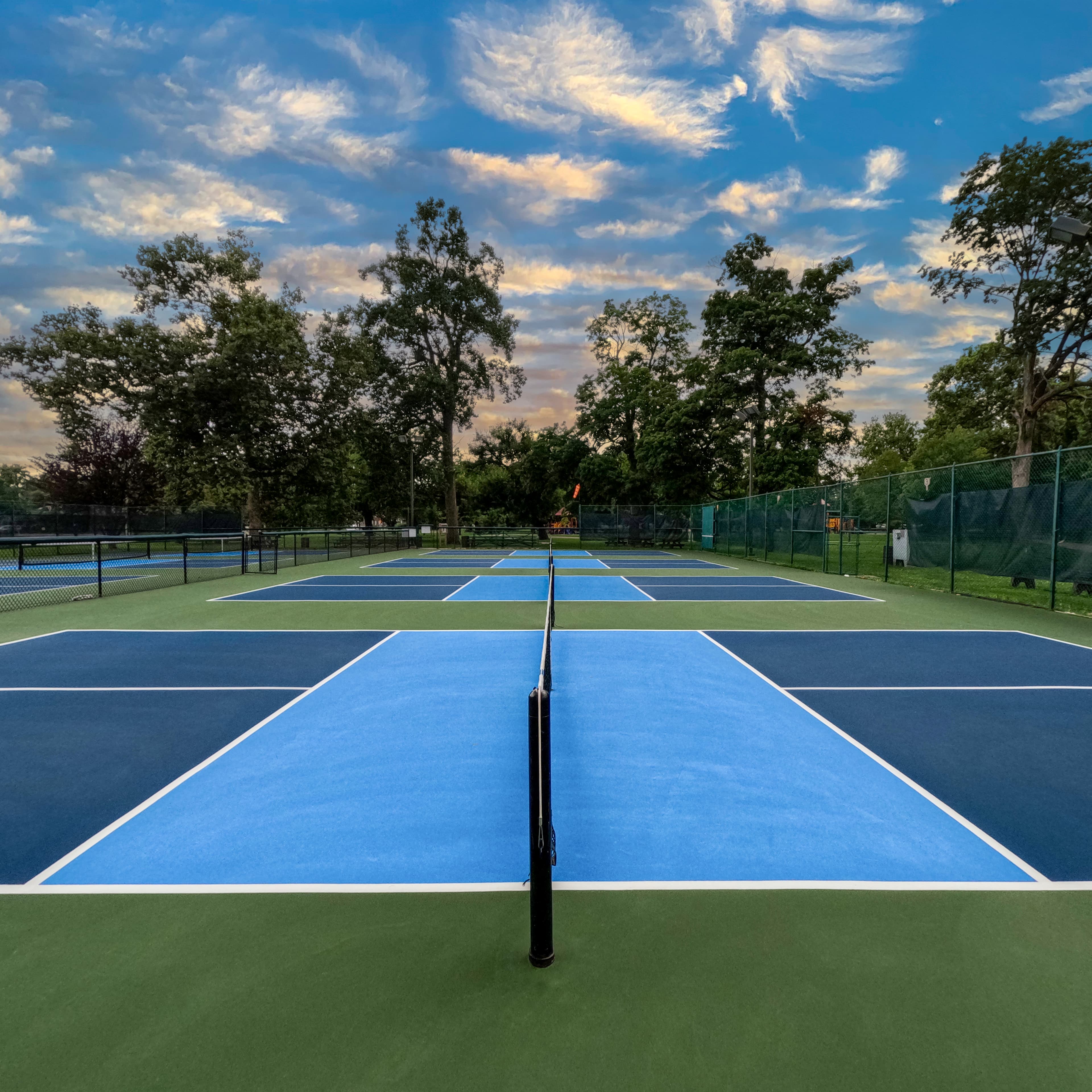
Residential
Backyard Courts
Multi-sport pads, half-court basketball, dedicated pickleball, or full tennis — sized to the property and the way the family plays.

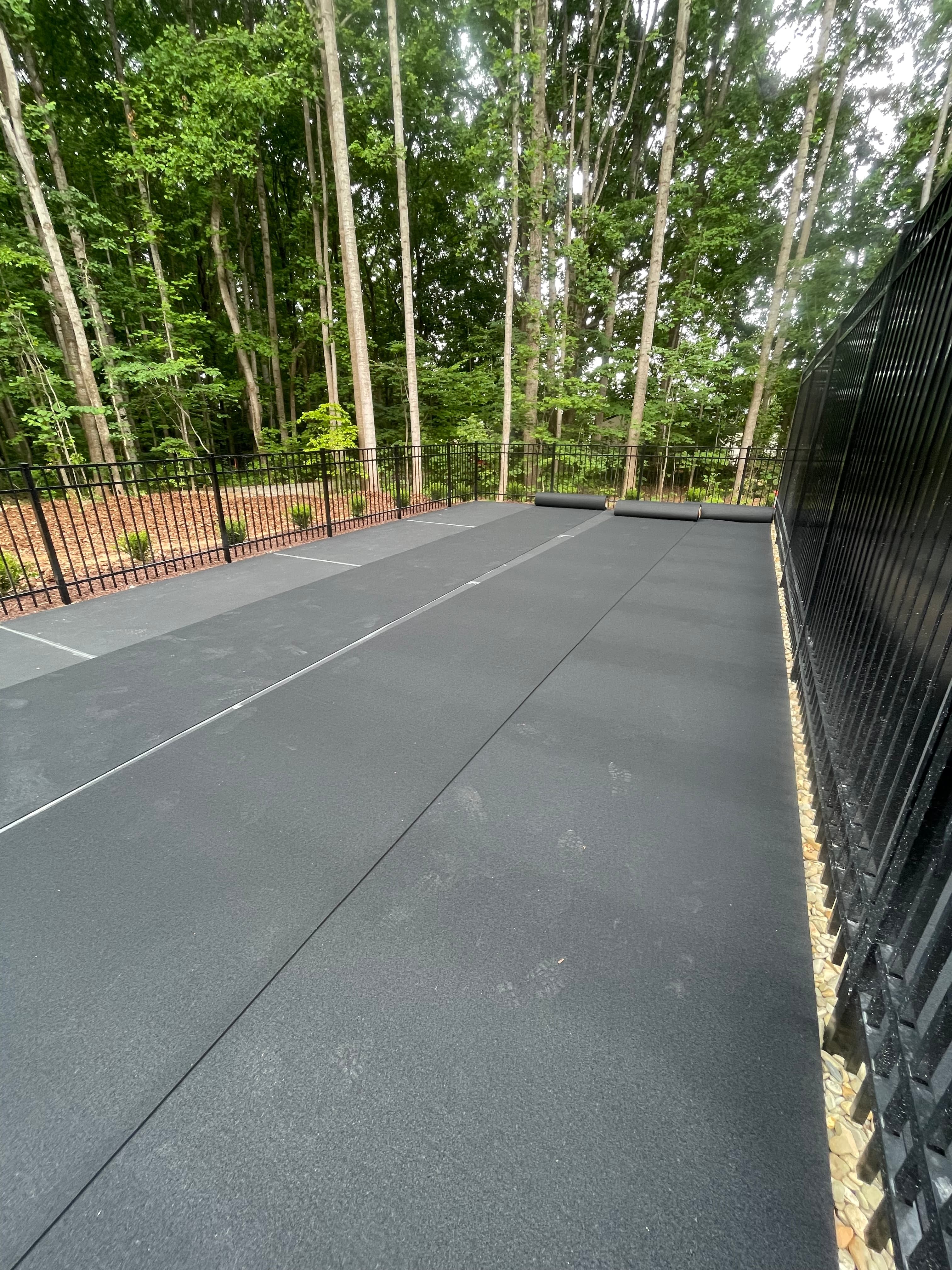
Cushioned Court Installation
Rubber-mat and cushioned acrylic systems for residential, community, and recreational courts — engineered for shock absorption and decades of base life.
Anatomy of a Court
A finished court is the visible top of a multi-layer system. The base, sub-base, and cushion layers do most of the long-term work — and they're the parts that are hardest to fix once the court is built. We design the build-up around the site, the use, and the surface system before any color goes down.
Cross-section shown is for a cushioned acrylic system on an asphalt base. Layers shown to scale relative to each other; the actual base is significantly thicker.
Cross-section
Cushioned acrylic on asphalt base
Lines & striping
Acrylic line paint
Color coats
Sand-blended acrylic, 2 coats
Cushion layer (optional)
Rubber-granule build-up — 4–6 mm
Asphalt or concrete base
Compacted, 3–4" minimum
Compacted aggregate sub-base
Engineered fill, graded for drainage
Earth / sub-grade below — graded and compacted prior to base installation.
System Comparison
The right system depends on who's playing, how often, and how the court will be used. A flat read on the trade-offs.
| Spec | Rubber Mat | Cushioned AcrylicMost popular | Standard Acrylic |
|---|---|---|---|
| Joint impact | Very low | Low | Firm |
| Court-grade play feel | Casual | Yes | Yes |
| Base required | Asphalt / concrete | Asphalt | Asphalt |
| Recoat cycle | 10+ yrs (tile life) | 4–8 yrs | 4–8 yrs |
| Maintenance | Minimal | Standard | Standard |
| Custom colors / lines | Limited | Full custom | Full custom |
| Best fit | Family / multi-sport | High-use clubs & homes | Tennis-focused budgets |
Where We Build
Residential
Multi-sport pads, half-court basketball, dedicated pickleball, or full tennis — sized to the property and the way the family plays.
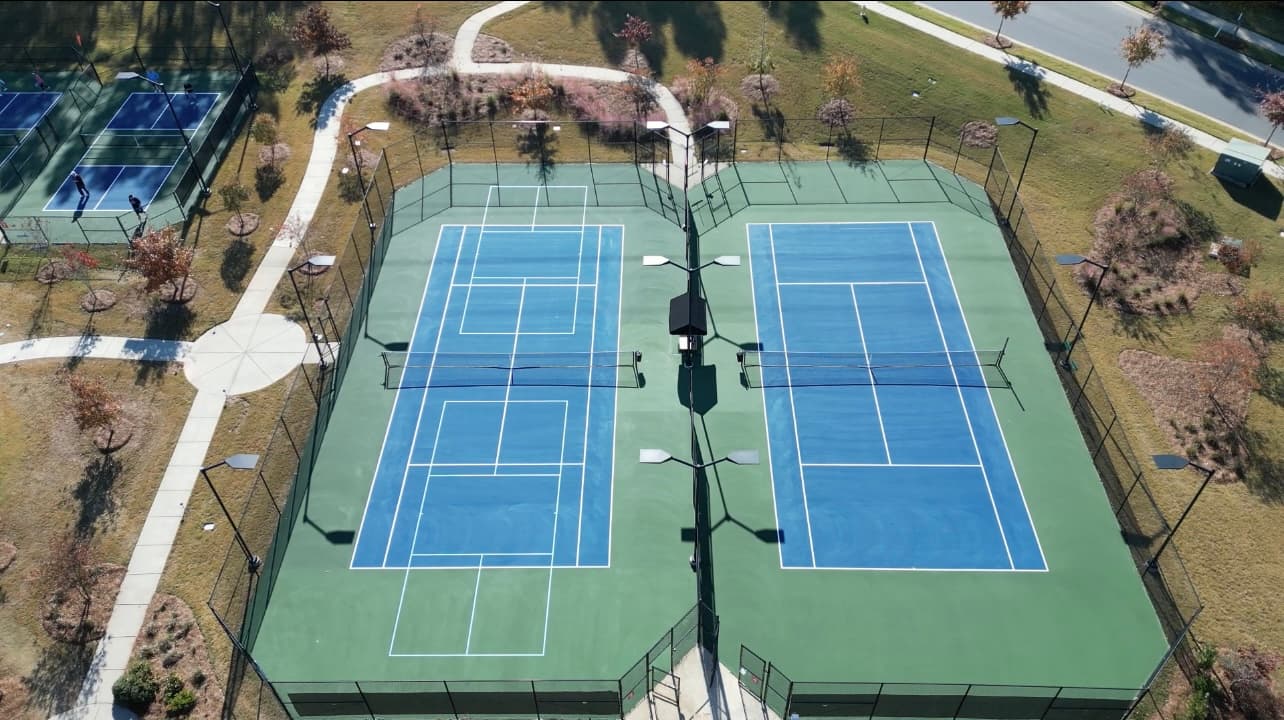
Community
Shared courts built to handle higher traffic, with maintenance baked into the surface and material choices from day one.
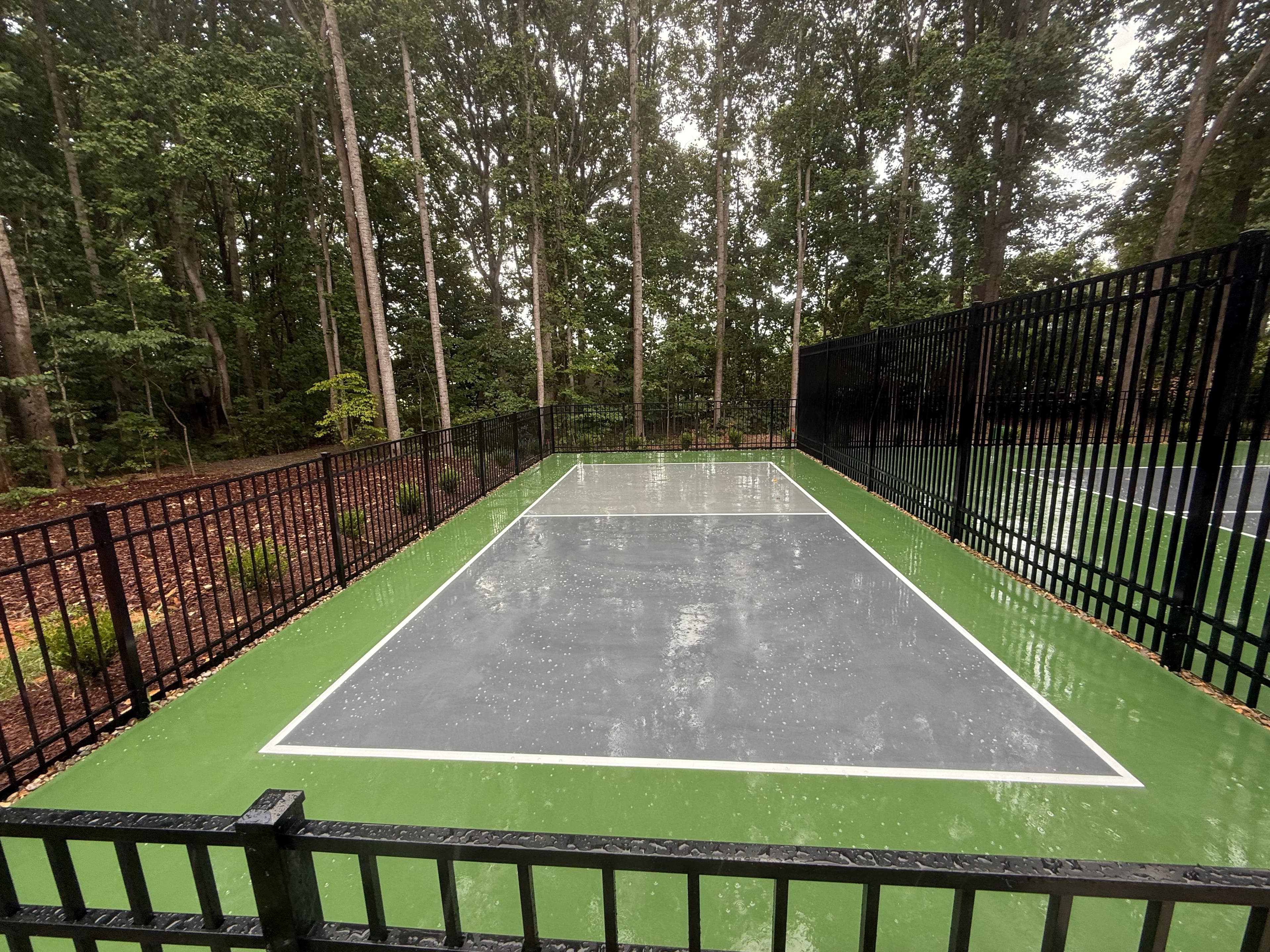
Schools
Practice courts and recreational pads for schools, camps, and instruction programs — tuned for younger players and frequent sessions.
Installation FAQs
A few of the questions we hear most often from homeowners, communities, and facilities planning a new court.
Explore More
Looking for a traditional hard court instead of a cushioned system? We surface and resurface tennis courts with professional acrylic systems.
Learn MoreBuilding a pickleball-focused court? We handle new construction, conversions from tennis, and shared multi-sport layouts.
Learn MoreKeep your installed court playing right with scheduled cleaning, seasonal care, and inspection programs.
Learn MoreService Area
Karona Courts works with homeowners, communities, schools, and clubs throughout the greater Charlotte region. If you're nearby and don't see your town listed, reach out — we likely cover it.
Schedule a site visit. We'll evaluate your space and walk you through the surface system, size, and layout that fit your project.