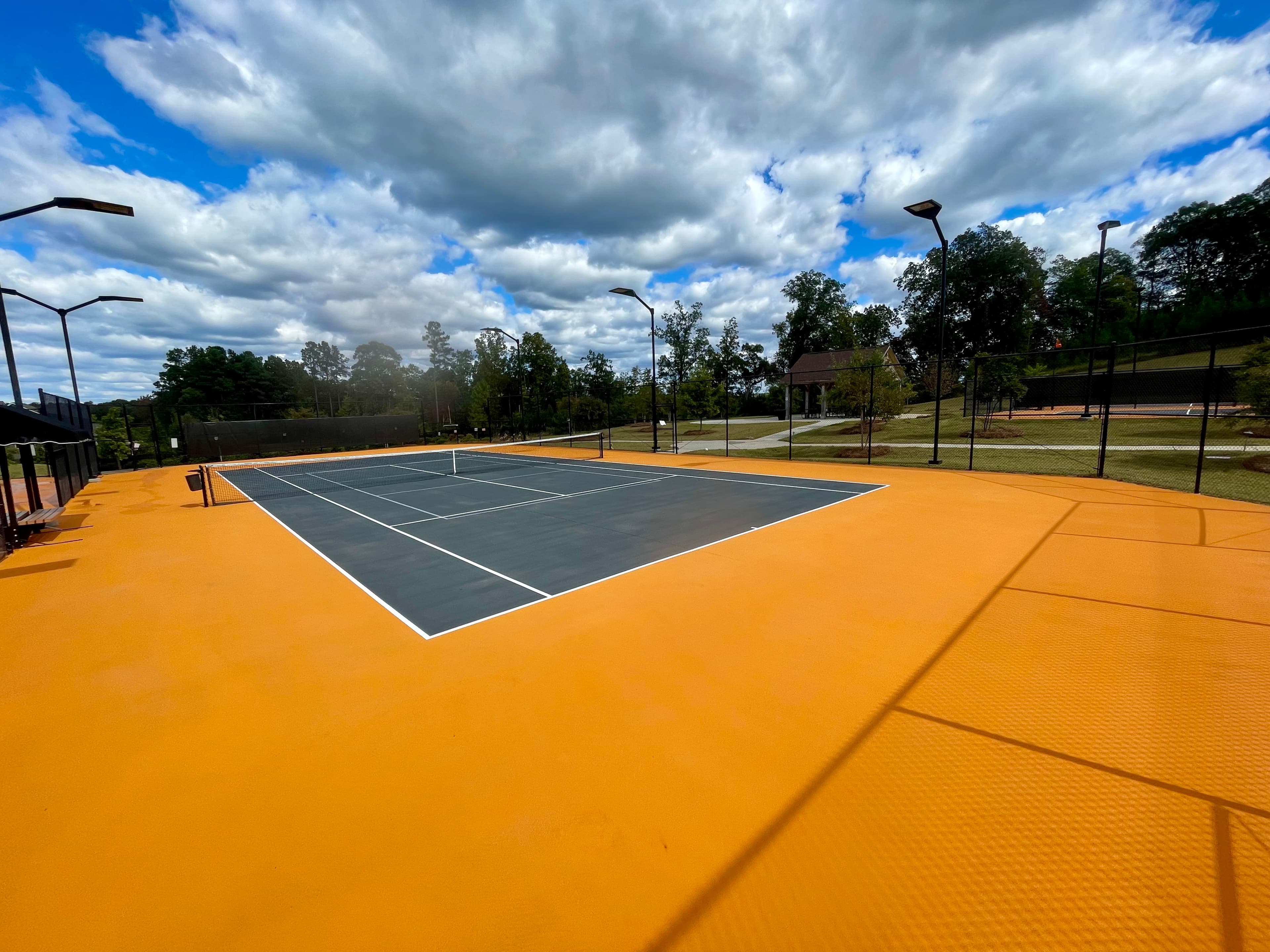
Clean, well-maintained tennis court in Charlotte, NC

Cleaning & Maintenance

Care That Adds Years Between Resurfacing

Routine and restorative cleaning that protects the color coats, restores traction, and keeps your court playing right all year.

Why It Matters

A Clean Court Lasts Significantly Longer

In Charlotte's climate, courts collect pollen, organic debris, mold, mildew, and algae year-round. Left in place, that buildup softens traction, dulls color, and accelerates the breakdown of the acrylic coatings underneath. A consistent care routine is the single most reliable way to make a resurfacing investment pay off.

1–2×

Professional cleanings per year

4

Seasons of distinct care needs

Acrylic-safe

Cleaners & controlled equipment

A Year on a Charlotte Court

What Each Season Asks of the Surface

Pollen-heavy springs, humid summers, leafy falls, and freeze-thaw winters each put a different kind of stress on the court. A care plan that follows the calendar keeps the surface ahead of the damage.

  1. Mar — May

    Spring

    Wake the Court Up

    Wash off pollen, debris, and any algae built up over winter. Inspect for new hairline cracks and address them before peak playing season. The best window to schedule a resurface, if it's that year.

    Pollen wash & rinseMildew & algae treatmentCrack inspection
  2. Jun — Aug

    Summer

    Stay Ahead of Heavy Use

    A mid-season rinse keeps the surface playing right when courts are getting the most use. Watch for slick spots from pollen film and humidity, and schedule a touch-up clean if traction starts dropping off.

    Mid-season surface rinseSpot-treat slick areasInspect kitchen-line wear
  3. Sep — Nov

    Fall

    Clear the Surface

    Remove leaves, organic debris, and any standing residue before they break down into the color coats. Confirm drainage is working — pooling water is a leading cause of winter damage on Charlotte courts.

    Leaf & debris clearingDrainage checkPost-season deep clean
  4. Dec — Feb

    Winter

    Protect Through the Cold

    Minimize standing water and snow accumulation if possible — freeze-thaw cycles widen hairline cracks. Avoid harsh ice melt on the playing surface; most products damage acrylic coatings.

    Avoid harsh ice meltClear standing waterWatch crack growth

Before / After

Sometimes the Court Isn't Worn — It's Just Dirty

A surface that's lost its color and traction often only needs a proper clean, not a resurface. Same court, before and after.
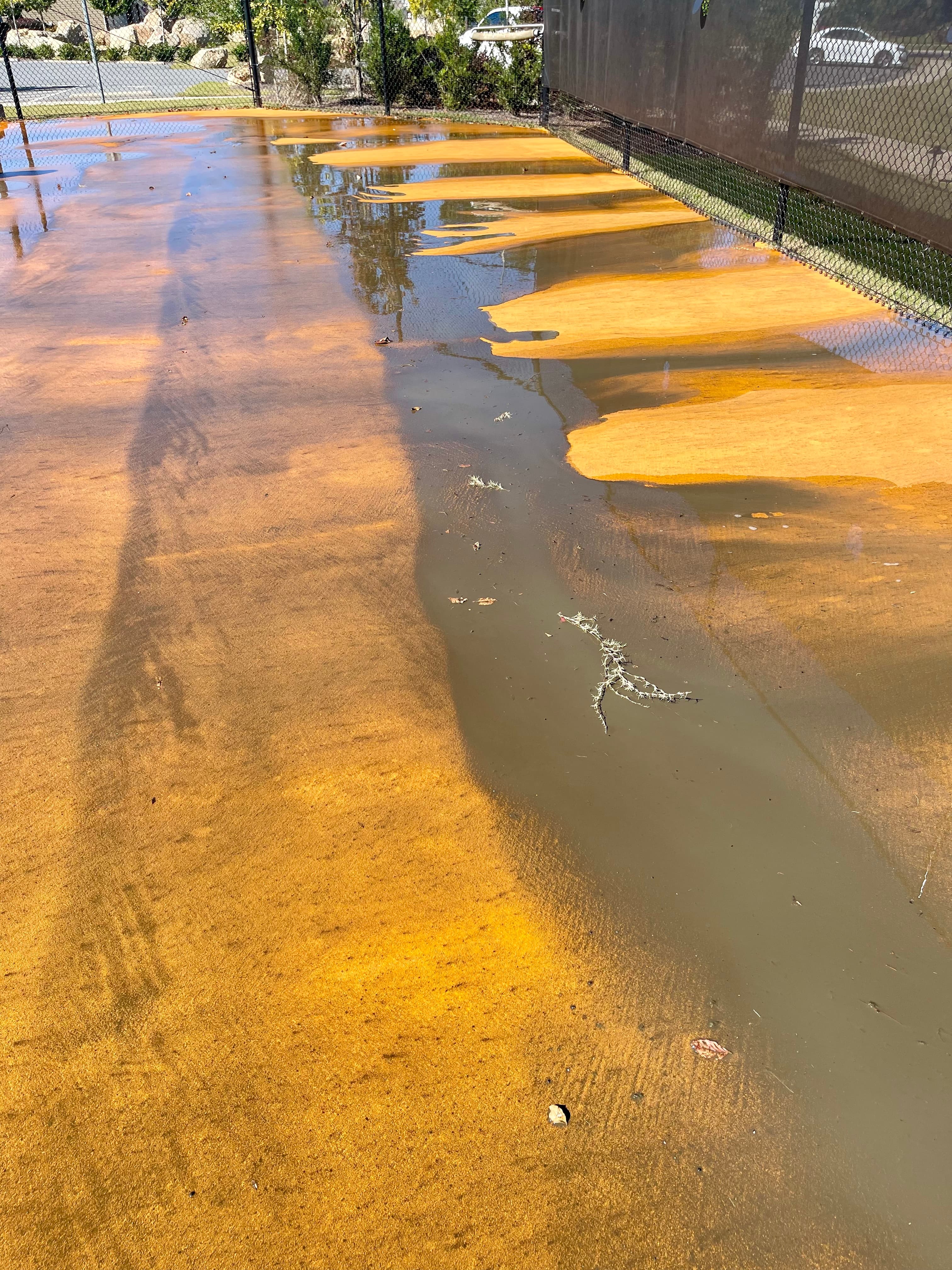
Tennis court surface before professional cleaning — algae and pollen buildup

Before

Algae & pollen buildup

Tennis court surface after professional cleaning — color and traction restored

After

Color & traction restored

Court-safe equipment

Controlled pressure and tip selections matched to acrylic sport surfaces — no granule lift or surface etching.

Acrylic-compatible cleaners

Products formulated for sport coatings, not generic outdoor cleaners that can strip color or weaken coatings.

Treats the cause

Address the source of the staining — shade, drainage, runoff — alongside the surface clean for longer-lasting results.

Service Options

Pick a Plan That Matches the Court

One-time cleanings, annual care plans, or multi-court programs for HOAs, clubs, and schools — we'll size the cadence to your court's environment and usage.

One-Time Restoration

A single deep cleaning — bringing a neglected court back to playable condition.

  • Full surface clean
  • Mildew/algae treatment
  • Drainage check
  • Crack inspection

Annual Care Plan

Most popular for residential and small-club courts — one cleaning per year, in spring.

  • Annual deep clean
  • Crack inspection
  • Drainage check
  • Maintenance recommendations

Multi-Court Program

Scheduled cleanings, inspections, and reporting for HOAs, clubs, and schools.

  • Multi-court scheduling
  • Multiple cleanings/year
  • Annual condition report
  • Coordinated repairs

Cleaning & Maintenance FAQs

Common Questions About Court Cleaning

A few of the questions we hear most often from clients caring for their tennis and pickleball courts.

How often should I clean my tennis or pickleball court?

For most outdoor courts in the Charlotte area, a thorough professional cleaning once a year is the baseline — typically in spring before peak playing season. Add a second cleaning in the fall after leaf drop if your court is surrounded by trees, and a quick rinse mid-summer if pollen and humidity have left the surface dingy. Heavily shaded courts and courts in tree-lined yards usually benefit from more frequent cleaning to keep mold and mildew under control.

How do I get rid of mold and mildew on my court?

Mold and mildew thrive on shaded, damp court surfaces — especially in Charlotte's humid summers. Light algae can sometimes be handled with a sodium hypochlorite or specialty court cleaner and a soft-bristle scrub. For established growth, a professional cleaning with the right product and technique is faster, safer for the surface, and more thorough. We use products formulated specifically for acrylic sport surfaces so we don't strip the color coats while we clean.

Can pressure washing damage my court?

Yes — high-pressure washing with the wrong settings or a too-aggressive nozzle can absolutely damage acrylic court surfaces. The color coats are thin, and excessive pressure or angle can lift granules, etch the surface, or expose underlying layers. Professional court cleaning uses controlled-pressure equipment and tip selections matched to acrylic sport surfaces. If you've been told 'pressure wash it' as a general piece of advice, push back — court surfaces need a court-appropriate technique.

What's the difference between cleaning and resurfacing?

Cleaning removes the dirt, mildew, algae, and buildup that sit on top of the surface — restoring traction, color brightness, and playability without changing the surface itself. Resurfacing applies new coating layers and is what's needed when the surface has aged out (faded color, slick texture, surface cracking). Cleaning extends the time between resurfacing applications and keeps the court playing right in the meantime; it doesn't replace resurfacing once the coats have worn through.

Do you offer ongoing maintenance plans?

Yes. We can set up a scheduled maintenance program tailored to your court's environment and usage. That typically includes one or two professional cleanings per year, periodic crack inspections, and recommendations on between-service upkeep you can handle yourself. For HOAs, clubs, and schools we can build a multi-court program that aligns with your fiscal year and play seasons.

Why does my court look green or stained?

Green discoloration is almost always algae or mildew growth driven by shade and moisture. Brown or dark staining is usually organic debris breaking down into the surface — leaves, pollen, or runoff from nearby trees and landscaping. Both respond well to professional cleaning. If staining persists after a thorough clean, the surface may have absorbed pigment over time, in which case a color-coat refresh is the most reliable way to restore appearance.

Service Area

Serving Charlotte and Surrounding Areas

Karona Courts works with homeowners, communities, schools, and clubs throughout the greater Charlotte region. If you're nearby and don't see your town listed, reach out — we likely cover it.

  • Charlotte
  • Ballantyne
  • SouthPark
  • Huntersville
  • Cornelius
  • Davidson
  • Matthews
  • Mint Hill
  • Indian Trail
  • Waxhaw
  • Marvin
  • Concord
  • Lake Norman
  • Pineville
  • Fort Mill
  • Weddington

Keep Your Court in Top Condition

Schedule a site visit to talk through cleaning and maintenance for your tennis or pickleball court.